Generic Core Web Vitals advice is written for blogs. WooCommerce fails differently: product pages carry galleries and variation logic, cart pages bypass page cache by design, and every plugin wants to enqueue something on checkout. This guide covers the Woo-specific fixes in the order that moves numbers most.
Why it matters commercially, not just for SEO
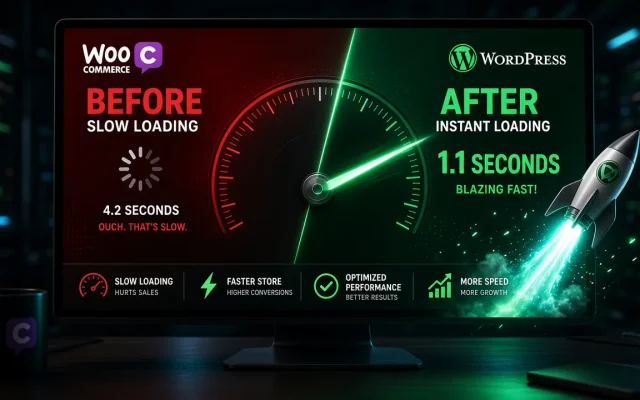
In our speed optimization case study, taking mobile LCP from 4.2s to 1.1s lifted mobile conversion rate by 18%. Speed is a conversion feature — treat the work below as revenue protection, not technical hygiene.
LCP: the product page hero image
On WooCommerce product pages the LCP element is almost always the main product image. Three fixes, in impact order:
- Preload the LCP image per template — server-side, in
wp_headfor singular products only. Not a sitewide preload. - Serve correct responsive sizes. WooCommerce default images are often 2–4× the display size. Regenerate with sensible
srcsetand WebP/AVIF. - Stop lazy-loading the first gallery image.
loading="lazy"on the LCP element delays it — exempt the first image, lazy the rest.
The caching mistakes that hurt WooCommerce
Cart and checkout must bypass full-page cache — but many store owners then skip caching entirely. The correct setup: full-page cache for catalog pages, Redis object cache for dynamic queries, and cart fragments replaced with a lightweight AJAX badge instead of WooCommerce’s default, which loads the entire cart object on every page view.
CLS: the layout-shift trio
- Set image dimensions on product images and gallery placeholders — WooCommerce templates do this, custom themes often forget
- Reserve space for related-products and upsells that hydrate late
- Fonts:
font-display: swapplus size-adjust fallbacks so the header does not jump
INP: interactivity on busy pages
Product pages with dozens of variation selects feel laggy when JS work piles up. Split long tasks, defer non-essential scripts (reviews, chat widgets, tracking) until after first interaction, and audit third-party tags — chat widgets are the usual INP killer on stores.
Measure like a professional
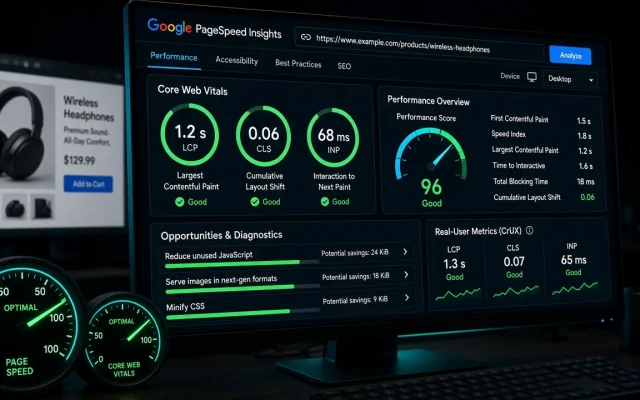
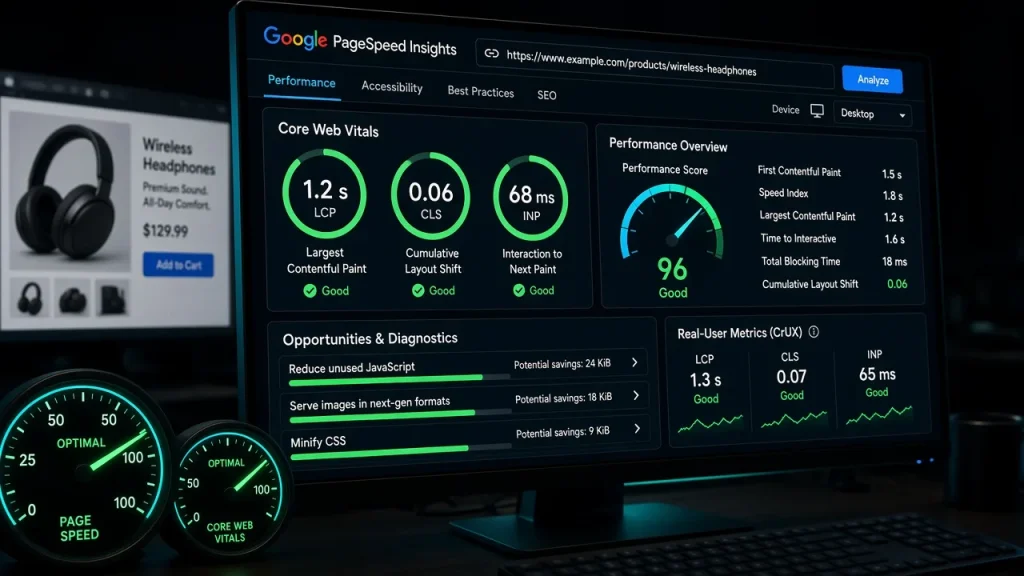
- Field data first: CrUX in PageSpeed Insights reflects real users; lab numbers validate fixes
- Test the templates that earn money: home, category, product, cart, checkout — not just the homepage
- Re-measure after 28 days — CrUX updates monthly; celebrate then, not on day one
The short version
- Preload + correctly sized LCP image, no lazy on first gallery image
- Full-page cache for catalog, object cache for queries, light cart fragment handling
- Unload plugin assets from pages where they do nothing
- Dimension everything, defer what never needs to run first
If you would rather see the fixes than read them, our speed optimization service delivers documented before/after Core Web Vitals — starting with the free audit that baselines your site.
Frequently asked
A lean theme removes 200–500ms. The remaining 2–3 seconds on a failing store are caching, images and plugin assets — infrastructure, not theme. Fix those first; see the case study numbers above. A focused sprint on one store typically lands in 5–8 working days, staged and tested, with the 28-day field-data verification after.Will switching to a faster theme alone fix my scores?
How long does a Core Web Vitals fix take?