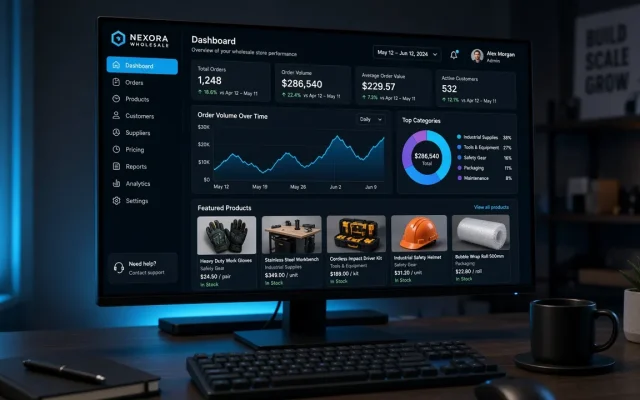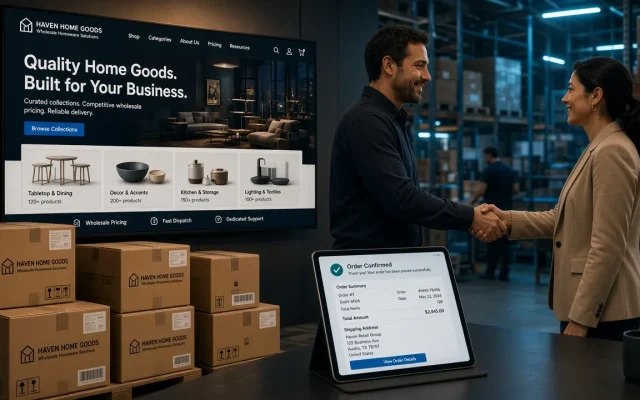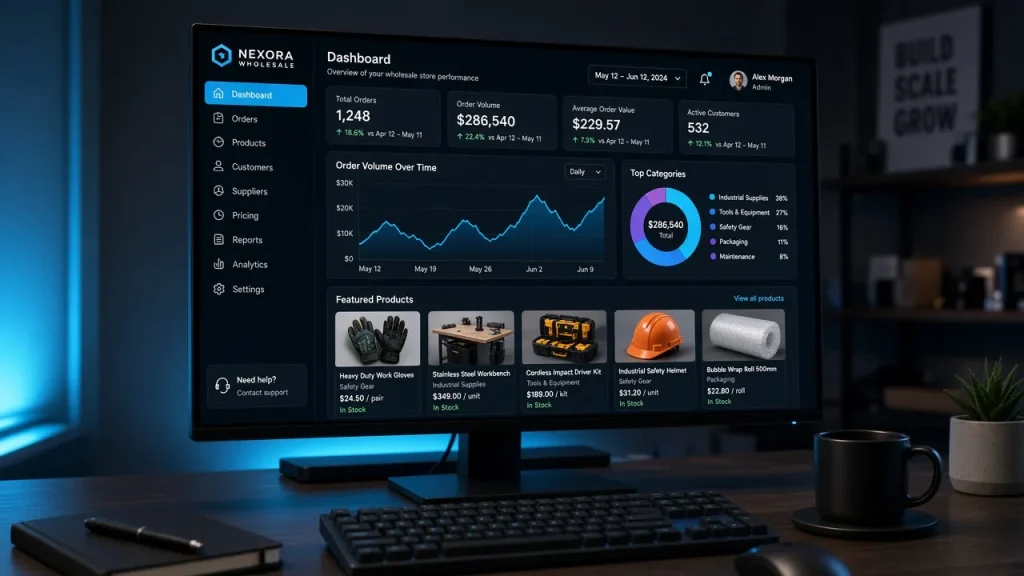
Most “fast WooCommerce theme” lists are affiliate pages with no measurements. We tested the themes below on a real B2B store build — 12,000 products, role-based pricing, quote flow — and scored them on mobile LCP, total page weight and how well they handle B2B-specific requirements like price lists and RFQ checkout.
How we score B2B WooCommerce themes
Lab scores alone do not tell you whether a theme suits a wholesale workflow. Our scoring weighs four things equally:
- Mobile LCP on a product page — measured with cold cache, throttled connection
- Code weight — CSS/JS shipped to a default product page
- B2B fit — hooks for pricing rules, quote requests, VAT fields without hacks
- Update discipline — release cadence and how much custom CSS it survives
The picks at a glance
| Theme | Mobile LCP (product page) | Page weight | Best for |
|---|---|---|---|
| GeneratePress | 1.2s | ~85 KB | Custom B2B builds where you control every module |
| Blocksy | 1.4s | ~110 KB | Feature-rich catalogs with dynamic filtering |
| Kadence | 1.4s | ~105 KB | Content-heavy stores with strong hero sections |
| Astra | 1.6s | ~95 KB | Fast time-to-market with starter templates |
| Flatsome | 1.8s | ~160 KB | Teams that want a proven UX library out of the box |
GeneratePress — the B2B builder’s theme
GeneratePress stays light because it ships almost nothing you did not ask for. Combined with its woocommerce hooks, adding role-based price display or a quote-request button at checkout is a clean 30 lines of code instead of a plugin. The trade-off: you (or your developer) make design decisions. For our B2B home goods case study, this was the base — and the store hit 1.1–1.4s LCP with zero caching heroics.
Blocksy — dynamic catalogs without the bloat tax
Blocksy handles large catalogs well: dynamic filters, color/size swatches and product badges load on demand rather than all at once. Its conditional header/footer builder means you can run a different checkout layout for wholesale customers without a second theme.
What we would avoid for B2B
Multipurpose themes that bundle sliders, page builders and 40 demo imports routinely ship 300–600 KB of CSS/JS before your content loads. On a B2B store where the same 200 customers order weekly, that weight buys you nothing — they care about order speed and quote turnaround.
The decision that matters more than the theme
Theme choice moves LCP by a few hundred milliseconds. Hosting, caching and image pipeline move it by seconds. If your store already fails Core Web Vitals, a theme swap will not save it — see how to fix Core Web Vitals on WooCommerce first, or hand the measurements to our team.
Frequently asked
Usually not. B2B templates are highly structured (price tables, spec sheets, RFQ forms) and builders add per-page weight for layout you could define once in code. A lean theme with a few custom block patterns does the same job lighter. Yes, if URLs stay identical and you preserve structured output (product schema, breadcrumbs). We migrate themes on staging with a crawler diff before go-live — it is a standard part of our development service.Should a B2B store use a page builder theme?
Can I switch themes without hurting SEO?